

China does not reveal itself all at once.
It unfolds — slowly, sometimes defiantly — across centuries, dynasties, revolutions and reinventions. To travel here is to step into a place that is at once ancient and unnervingly modern; poetic and pragmatic; deeply spiritual and meticulously controlled. It is a country that resists simplification — and that, perhaps, is its greatest allure.
We arrive carrying assumptions. We leave with questions.
China’s earliest civilisations were already sophisticated when much of the world was still finding its feet. Philosophy, astronomy, medicine, calligraphy, poetry — not as decorative arts, but as ways of understanding one’s place in the universe. Confucian ideals shaped social order; Daoism whispered of harmony and flow; Buddhism brought contemplation and compassion. These ideas still hum beneath daily life, even as glass towers rise overhead.
Then came fracture. Invasion, civil war, revolution. The trauma of the Second World War. The ideological certainty of communism. The Cultural Revolution’s erasures. And, in recent decades, one of the most astonishing transformations the modern world has witnessed — a nation accelerating into the future at breathtaking speed.
And yet… not everything moved forward.
In Shanghai, the skyline glows with ambition. Art Deco mansions line the Bund, relics of another era, while Pudong’s towers pulse with global confidence. It is fashion-forward, creative, restless — a city that knows how to perform modernity without quite abandoning its soul.
Beijing feels different. Weightier. Layered. Imperial courtyards sit quietly behind traffic-clogged avenues; hutongs hold fast to rhythms that predate the state itself. Power is tangible here — historical and contemporary — and the contrast between past and present feels almost confrontational.
In Chengdu, time softens. Teahouses hum with conversation; mahjong tiles click beneath ancient trees. This is the home of the panda, yes — but also of a gentler philosophy. Life here seems less about urgency, more about balance. It is no coincidence that Daoism took root nearby.
And then there is Hong Kong — restless, expressive, complex. A city that has always lived between worlds, its identity shaped by trade, migration, dissent and reinvention. Few places wear their contradictions so openly.
But China’s story is not only urban.
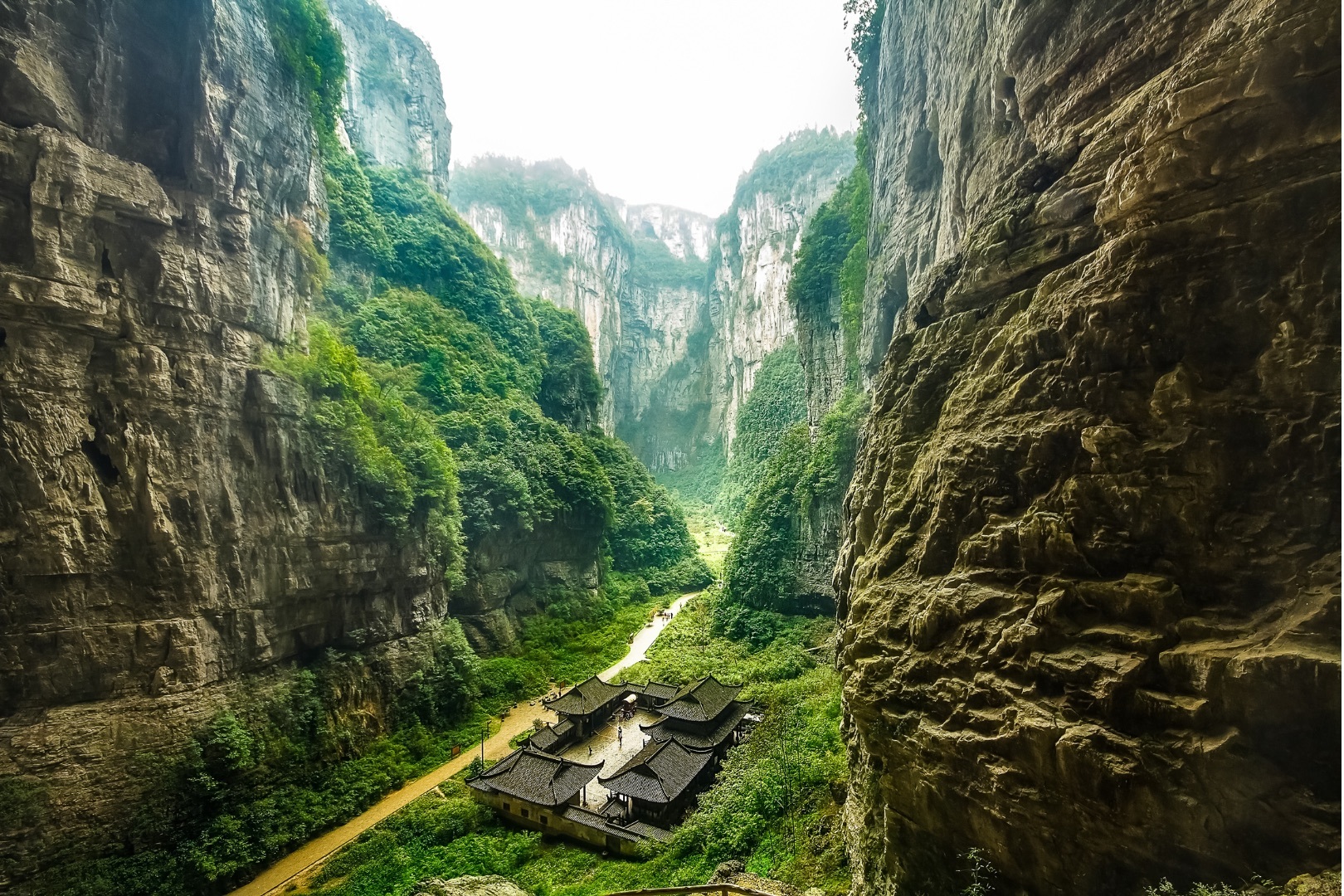
Beyond the cities, China shifts again. Mountains wrapped in mist. Rivers that have shaped myth and memory. Sacred landscapes where temples cling to cliffs and monks still rise before dawn. In places like Qingcheng, the modern world feels very far away. Here, Daoism is not an abstract philosophy but a lived practice — an invitation to slow down, to observe, to breathe.
The arts endure too. Opera with its coded gestures and piercing vocals. Ink painting that values what is left unsaid as much as what is depicted. Poetry that speaks of exile, longing, nature and restraint. Even now, creativity persists — sometimes quietly, sometimes boldly — adapting, responding, surviving.
So what is China, really?
Is it rigid or fluid? Ancient or futuristic? Controlled or quietly rebellious? The truth, of course, is that it is all of these things — often at the same time. China is not a single story but a collection of overlapping narratives, shaped by geography, history, belief and power.
And perhaps this is why it fascinates so deeply. China does not ask to be consumed quickly. It asks to be considered.
This November, we return to China with fresh eyes — exploring its glamour and grace, its cultural depth and lesser-seen corners, travelling from the cosmopolitan energy of Shanghai to the soulful rhythms of Chengdu, and into the spiritual calm of Qingcheng’s mountains. China Uncovered: Glamour, Culture & Hidden Corners is not about ticking boxes. It is about context. About contrast. About allowing the country to reveal itself slowly — and leaving space for the questions that remain.
Because the most compelling journeys don’t give you answers.
They change the way you see the world — and yourself — long after you return home.
